
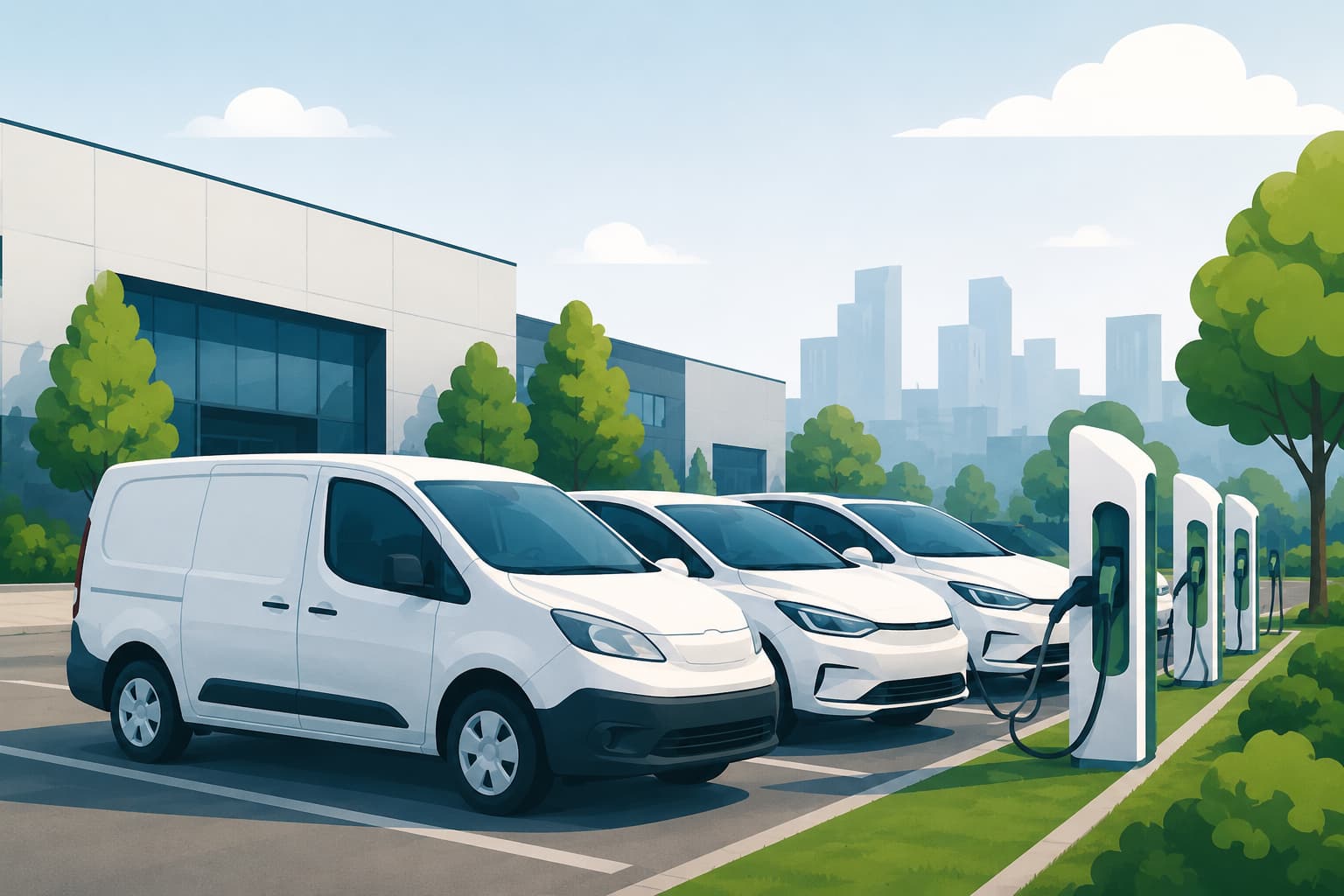
For many companies, the move from petrol and diesel vehicles to electric vehicles no longer looks like a distant sustainability idea. It is becoming a practical business question. Corporate fleets are visible, expensive, and closely tied to emissions, logistics, customer service, and public reputation. A company that operates vans, sales cars, service vehicles, delivery fleets, or executive transport cannot discuss climate strategy seriously while ignoring how its vehicles are powered.
At the same time, the transition is not simple. Electric vehicles can reduce tailpipe emissions and lower fuel costs, but they also create new infrastructure demands. Charging points, grid capacity, depot upgrades, route planning, driver habits, vehicle downtime, maintenance systems, and financing models all become part of the decision. The biggest challenge for many businesses is not whether electric vehicles are useful. The challenge is how to electrify a fleet when infrastructure is still expensive, uneven, and often slower to build than expected.
The first mistake companies make is treating fleet electrification as a vehicle purchase decision only. They compare the price of an electric van with a diesel van, calculate fuel savings, and look at tax incentives. This is important, but it is not enough. An electric fleet depends on a charging ecosystem. Without reliable charging, the vehicle becomes a risk rather than an asset.
A company with ten office cars may be able to rely partly on public charging. A delivery business with fifty vans cannot do that so easily. It needs predictable charging windows, enough chargers at the depot, clear overnight access, and a backup plan for peak days. The vehicle and the charger must be planned together. Otherwise, the company may buy electric vehicles before it can actually use them efficiently.
Infrastructure cost is the main reason many businesses move slowly. Installing chargers at a company site can involve more than the charger itself. There may be electrical surveys, grid connection upgrades, planning permissions, cable work, parking redesign, software systems, and ongoing maintenance. In older business parks or warehouses, the electrical capacity may not support fast charging without major investment. This turns a green transport decision into a property and energy project.
This is why companies need to start with data, not slogans. The best first step is to map the existing fleet. How many vehicles are used each day? What distances do they cover? Where do they park overnight? Which vehicles return to base, and which go home with employees? Which routes are predictable, and which are flexible? Which vehicles carry heavy loads? Which are used only during business hours? These details show where electrification is easy, where it is possible with planning, and where it may be too early.
Not every vehicle needs to be electrified at once. A phased approach is usually more realistic. Companies can begin with vehicles that have fixed routes, low daily mileage, predictable parking, and long idle periods. Pool cars, local service vehicles, city delivery vans, and internal site vehicles are often easier to electrify than long-distance or emergency-response vehicles. Early success matters because it builds confidence inside the business.
The financial case also needs to be broader than purchase price. Electric vehicles may have higher upfront costs, but lower energy and maintenance costs over time. They may also help with access to low-emission zones, sustainability reporting, procurement requirements, and customer expectations. Some companies may win contracts because they can demonstrate lower transport emissions. Others may reduce exposure to future fuel price volatility. These benefits are harder to calculate than fuel savings, but they can be commercially important.
However, companies should avoid pretending that the transition pays for itself instantly. In many cases, the infrastructure investment comes before the savings. This creates a cash flow problem. Leasing, charger-as-a-service models, energy partnerships, and staged depot upgrades can help spread the cost. For smaller firms, shared charging hubs in business parks or industrial areas may become more important. Not every company can afford a private charging network from day one.
There is also an operational side that is often underestimated. Drivers need training. They need to understand range, charging behavior, regenerative braking, route planning, and what to do when a charger is unavailable. Managers need systems to monitor vehicle use and charging performance. Finance teams need new ways to separate business and personal charging costs when employees take vehicles home. HR teams may need policies for home charging, reimbursement, safety, and access.
A weak transition plan can create frustration quickly. Drivers may complain that vehicles are not ready in the morning. Managers may worry about missed deliveries. Finance teams may see energy bills rise without clear tracking. Customers may not care that the company is testing a greener fleet if service quality drops. This is why fleet electrification should be treated as a change management project, not only an environmental upgrade.
The grid question is becoming more serious too. As more companies install chargers, local electricity networks face pressure. Businesses may need to work with energy providers earlier than expected. Smart charging can reduce some of this pressure by charging vehicles at lower-demand times. Solar panels, battery storage, and energy management software may also support the business case, especially for depots with large roofs and predictable overnight parking. But these solutions add complexity and require long-term planning.
The climate argument remains strong. Road transport is a major source of emissions, and corporate fleets are one area where businesses have direct control. Unlike some supply chain emissions, fleet emissions can be measured, managed, and reduced through clear operational decisions. Electrification also sends a visible signal to employees, customers, investors, and local communities. A company van on the road is not just a transport tool. It is a moving statement about the company’s priorities.
Still, the most credible companies will be honest about the limits. Electric vehicles are not a magic solution. They do not remove congestion, road wear, battery supply concerns, or the need for cleaner electricity. A serious fleet strategy should also include route optimization, fewer unnecessary trips, better vehicle loading, public transport support, remote service options, and smarter scheduling. Electrification works best when it is part of a wider mobility and climate plan.
For businesses, the question is no longer whether electric fleets belong in the future. The question is how to build that future without damaging daily operations or wasting capital. The companies that succeed will not be the ones that buy the most electric vehicles fastest. They will be the ones that understand their routes, prepare their infrastructure, train their people, control their costs, and move in stages.
Corporate fleet electrification is becoming a test of practical climate leadership. It requires ambition, but it also requires discipline. In an era of expensive infrastructure, the strongest strategy is not the loudest green promise. It is a careful plan that turns vehicles, chargers, energy, people, and business goals into one working system.